










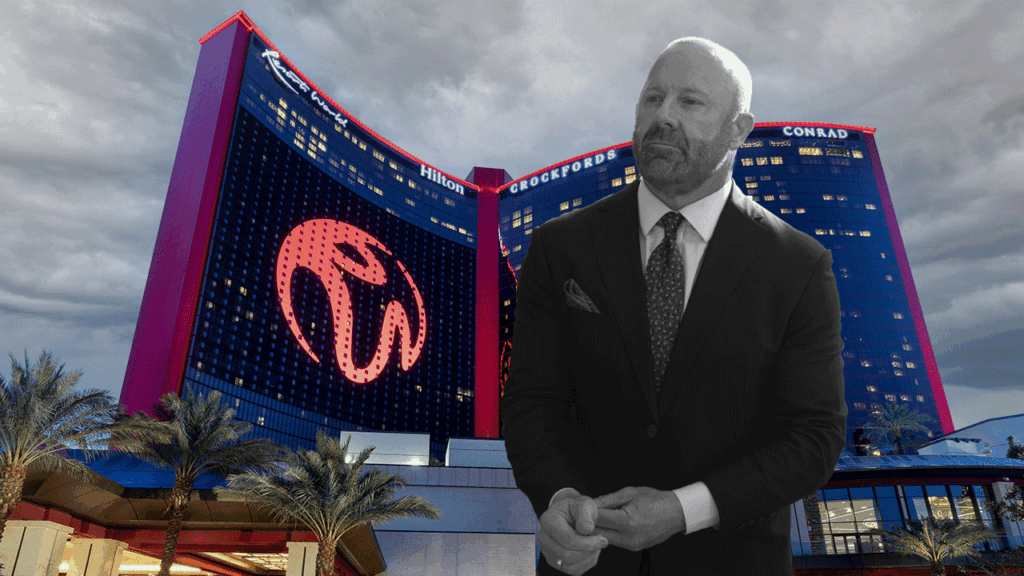
Last week’s Nevada Gaming Control Board hearing around Resorts World Las Vegas was one of those moments that quietly says a lot about how casino compliance actually works — and how it fails.
The facts are now public. Resorts World agreed to a $10.5 million fine tied to its handling of an illegal bookmaker, Matthew Bowyer, who later pleaded guilty in federal court to operating an unlawful gambling business, money laundering, and filing a false tax return. On the same day the Board addressed governance issues at Resorts World, regulators also recommended Bowyer be placed in Nevada’s Black Book, permanently excluding him from casinos statewide.

Bowyer operated an illegal sports betting operation for at least five years, at times handling more than 700 bettors — including Ippei Mizuhara, the former interpreter for Shohei Ohtani. He began serving a 12-month federal prison sentence in October, with release expected later this year, followed by two years of supervised release.

But what stood out most to me wasn’t the size of the fine or the Black Book recommendation.
It was a single comment from Nevada Gaming Control Board member George Assad.
He said Resorts World likely could have avoided the fine entirely if it had a Board of Directors in place.
That comment explains more than most people realize.
Governance isn’t cosmetic — it’s a control

In a highly regulated gaming environment like Nevada, a board of directors isn’t window dressing. It’s a structural control.
Boards set risk appetite. They empower compliance to override revenue pressure. And they force uncomfortable questions to be answered before regulators ask them.
Resorts World opened without a traditional, fully empowered board. When that layer is missing, decisions slide downward. Hosts push. Revenue teams lean in. Compliance becomes reactive instead of authoritative.
That’s how someone like Bowyer doesn’t just walk in — but stays.
Why this likely would not have unfolded the same way at Wynn

This is where comparisons naturally arise with Wynn Las Vegas.
To be clear: this isn’t about pretending Wynn is perfect. It isn’t. I’ll get to that.
But structurally, the Bowyer scenario is exactly the kind of situation Wynn’s internal controls are designed to catch early.
At Wynn, compliance is not a support function — it’s a gatekeeper. High-value patrons are continuously risk-rated. Source-of-funds and source-of-wealth reviews are not one-time exercises. Hosts do not outrank compliance. And when the money story doesn’t make sense, play slows or stops, even if that hurts in the short term.
Wynn is institutionally biased toward losing a patron rather than explaining one to regulators later.
In the Bowyer case, the red flags were not subtle:
- Cash-intensive activity inconsistent with disclosed income
- Patterns that resembled financial routing more than entertainment
- Reputation indicators that “everyone knew”
- On-property behavior consistent with business activity, not leisure gambling
At Wynn, that combination almost always triggers enhanced due diligence that creates real friction. Friction is the point.
But let’s not pretend Wynn hasn’t had compliance issues
Here’s the nuance that matters.
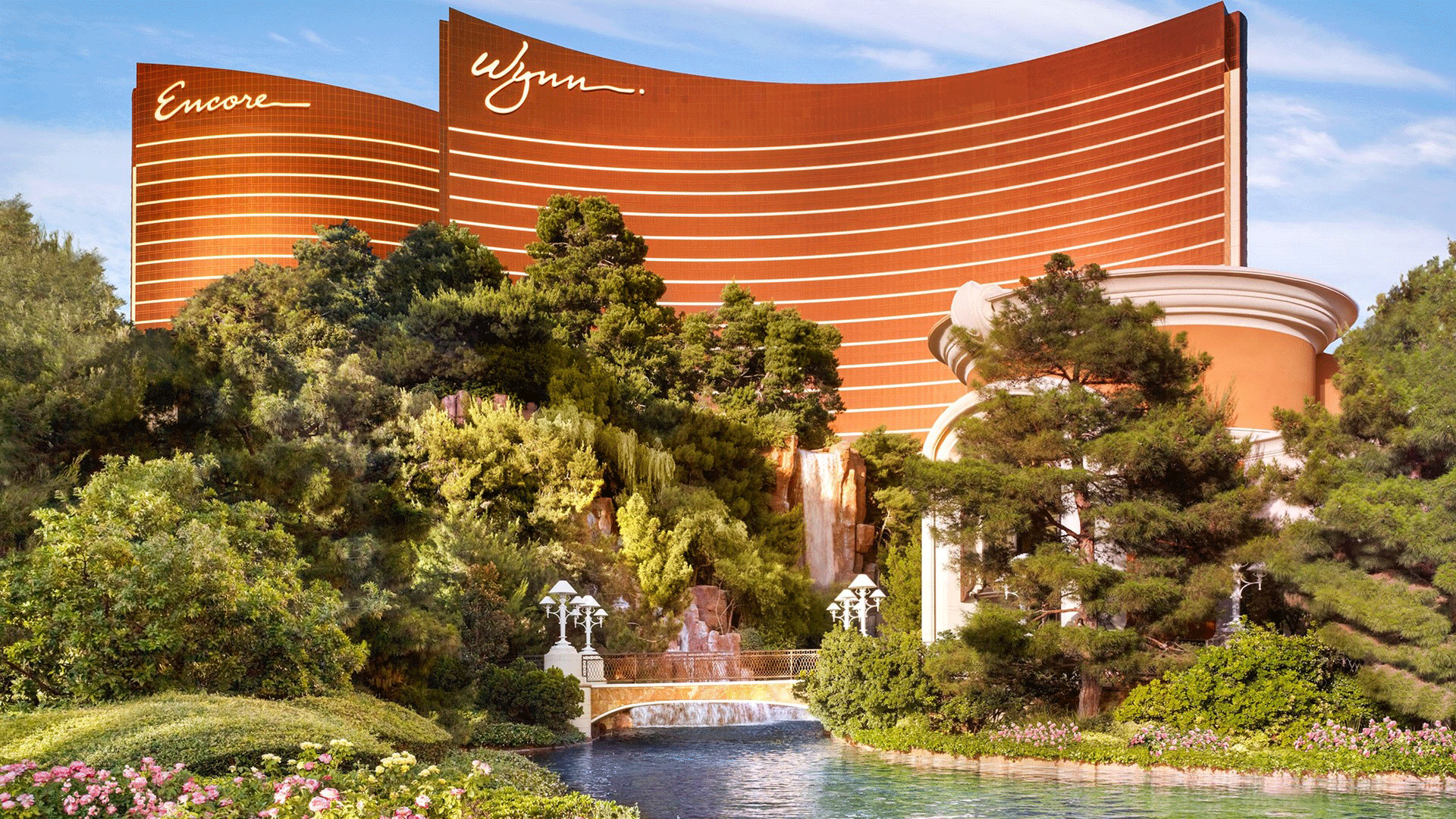
Even Wynn — often held up as the gold standard — has faced recent compliance scrutiny, fines, and regulatory remediation over the past year and beyond. These were not Bowyer-type failures, but they were reminders of a larger truth:
Wynn’s issues stemmed from regulators pushing standards higher, not from the casino turning a blind eye. The penalties reflected retrospective scrutiny and evolving expectations — and Wynn responded by reinforcing controls, documentation, and governance. That’s how a mature operator absorbs regulatory pressure: by adjusting early and visibly, rather than being corrected publicly after the fact.
In Wynn’s case, the recent scrutiny wasn’t about knowingly catering to an illegal bookmaker, but about whether internal controls and documentation kept pace with increasingly aggressive federal expectations. In September 2024, the U.S. Department of Justice announced that Wynn Las Vegas agreed to forfeit $130 million as part of a non-prosecution agreement tied to transactions involving unlicensed money transmitting businesses, a reminder that casinos are treated like banks under federal law, not entertainment venues. Separately, reporting by the Associated Press underscored how regulators are now willing to impose meaningful financial and reputational consequences even on operators long viewed as best-in-class — not because they ignored compliance, but because regulators believed more should have been done, sooner.
While $130 million is a far larger number than Resorts World’s $10.5 million fine, the comparison is misleading. Wynn’s forfeiture reflected retrospective federal scrutiny over how funds were moved and documented, not an allegation that the property knowingly enabled an illegal gambling operation — a distinction regulators treat very differently. That difference is exactly why the Gaming Control Board’s comment about Resorts World lacking a functioning Board of Directors matters: governance doesn’t eliminate risk, but it dramatically shortens how long problems are allowed to exist before they become enforcement actions.
Nevada gaming compliance is not static.
Regulators raise expectations. Federal AML standards evolve. What passed five years ago can trigger findings today. Wynn has had to enhance internal controls, respond to regulatory feedback, and absorb penalties that, while far smaller than Resorts World’s, still matter.
That’s not hypocrisy. It’s reality.
Casinos are treated as financial institutions under Federal AML (Anti-Money Laundering) requirements, largely through the Bank Secrecy Act. That means casinos are legally required to understand where money comes from, monitor how it moves through the property, and intervene when activity shows signs of criminal behavior. The standard isn’t perfection — it’s vigilance.
Resorts World’s issue wasn’t one bad actor — it was system design

Bowyer didn’t create Resorts World’s compliance weaknesses. He exploited them.
The lack of a functioning board meant:
- No independent escalation layer
- Less resistance to revenue pressure
- Delayed recognition that the risk profile had changed
By the time law enforcement intervened, the exposure wasn’t theoretical. It was historical.
That’s why the fine reached eight figures. And that’s why regulators explicitly tied governance failures to the outcome.
The uncomfortable truth for every casino operator
This case isn’t really about Resorts World versus Wynn.
It’s about what happens when compliance authority lags revenue ambition, governance is treated as optional, and “known players” stop being questioned.
Even the best operators get tested. Wynn included. The difference is how early those tests are confronted — and at what internal level.
Nevada regulators don’t expect casinos to be psychic. They expect them to be skeptical, intrusive, and willing to say no.
That’s uncomfortable. It’s expensive. And it’s the cost of holding a gaming license in the most regulated casino market in the world.

What Nevada Regulators Are Really Telling the Industry
The Bowyer case will be taught internally at casinos for years — not as a morality tale, but as a governance lesson.
Resorts World paid $10.5 million to learn it.
Wynn, despite its own recent compliance bruises, has spent decades building systems designed to learn it earlier.
Wynn, despite its own recent compliance bruises, has spent decades building systems designed to surface problems early, force uncomfortable conversations, and make decisions before regulators are compelled to. In Nevada gaming, that difference — governance with real authority, and leadership willing to listen when compliance says stop — is what separates a manageable issue from a public enforcement action.
Book your next stay at Resorts World Las Vegas or Wynn/Encore Las Vegas via The Vegas Experts!
Michael is a travel enthusiast who is passionate about food and casino adventures and is very detail-oriented when it comes to travel, especially when it comes to the entire flight and airport experience. Before returning to the USA, he resided in Europe (Amsterdam and London) from 2013 to 2020. Current passion projects include TravelZork, the creation of ZorkFest (The Preeminent Consumer-Focused Travel Loyalty (Miles+Points) and Casino Loyalty Conference), and ZorkCast Podcast. In addition, Michael is passionate about the history of Las Vegas and Atlantic City, as well as baccarat, and enjoys cooking and experiencing food around the globe.