













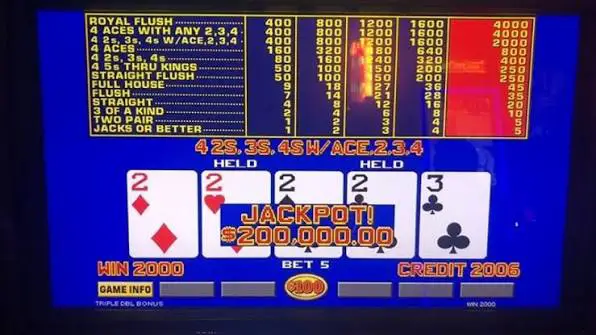
One of the fundamental principles of casino game math (and really, of all gambling strategy) is the concept of expected value (EV). It’s the mathematical average you can expect to win or lose per bet, hand, or session over time. For example, if you play a well-structured game of blackjack or a full-pay video poker machine, you can calculate precisely what your long-term result should be, assuming you follow optimal strategy.
Of course, “should” is doing a lot of work in that sentence.
When Variance Overwhelms the Math
In the short term, variance (the randomness of individual results) can completely overwhelm expected value. You might hit four aces twice in one hour of video poker and walk away feeling like a genius, or you could go 10,000 hands without a royal flush and start to doubt the existence of mathematics itself. But over time (meaning thousands, or even millions, of hands), your actual results will begin to converge on your expected value.

So what does that mean for you, the smart and strategic player? It means that trusting the math, not your emotions or short-term outcomes, is the key to long-term success. If you understand EV and how to calculate it, you can confidently pursue opportunities that might look like losers in the short run but are statistically profitable over time.
In video poker, for example, many sources cite about 2 million hands as the point where your results will begin to reliably mirror the expected value of the game. That might sound like an outrageous number (and to be fair, it is), but if you’re playing seriously, it’s not unattainable. For me personally, that works out to around 2,500 hours of play, assuming my consistent pace and adherence to perfect strategy.
Playing for a Statistical Edge
This mindset is especially important when it comes to promotions, bonuses, or comps offered by casinos. If I calculate that a promotion has a positive expected value (even by a slim margin), I’ll pursue it with enthusiasm. Yes, I might lose money in the short run. I might lose money ten times in a row. But I’m not playing for luck. I’m playing for a statistical edge. And if I do it enough times, the math says I’ll come out ahead. That’s not gambling (that’s just variance playing out before probability takes over).
Taking Emotion Out of the Decision
There’s a real freedom in thinking this way. It lets you take the emotional rollercoaster out of gambling decisions. You stop worrying about the outcomes of individual sessions and focus instead on whether the decisions you’re making are sound in the long term. It’s a shift from reacting to results to trusting a well-reasoned process.
And here’s the kicker: even when I lose, I don’t consider it a failure. If the play was +EV, it was the right play. That’s the kind of discipline that separates professional-style players from casual gamblers. Knowing the math, sticking to it, and embracing the long game is how you transform gambling from a series of guesses into something that resembles investment (albeit a very entertaining, fast-paced, and sometimes frustrating one).
Ask Whether It Was a Good Bet
So whether you’re hitting the casino floor or evaluating a new player promotion, don’t just ask, “Did I win?” Ask, “Was this a good bet?” That’s the real measure of success.
JOIN OUR NEWSLETTER
You’ll get insider updates, deals , commentary and “what’s up”
2x a month with no spam ever.
Sign up-> HERE
GET MORE from TRAVELZORK
Book Travel with: TravelZork Travel
Stay up to date with: ZorkFest
Join the TravelZork FB Group -> HERE
Also: Watch, Like, and Sub on YouTube
Check it out: The Yo-11 Minutes Playlist on YouTube
JonB is a longtime ZorkFest attendee, Vegas aficionado, and ZorkFest 2025 presenter. He found his way into casino loyalty after first exploring the points and miles world. While he doesn’t consider himself a points and miles expert, he knows how to find the right information and use it when it matters. That background helped him spot value in tier matches, casino promos, and comp systems, and he’s been chasing smart plays ever since.
You’ll often find him active in Vegas and gaming-focused social media groups, sharing a practical, no-nonsense approach to loyalty and recreational play. He considers himself a marginal advantage player who understands the math, looks for value, but still enjoys the entertainment side of the casino. Outside of the casino, he works in public safety and as a medical educator.