











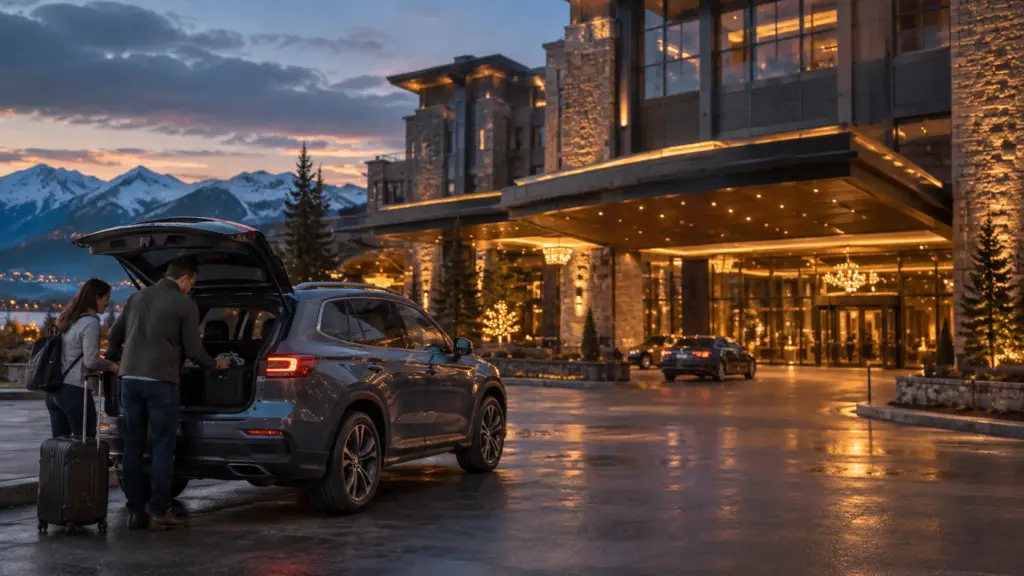
A drive across Canada forces travelers to think differently about where they spend the night. Vancouver to Toronto is roughly 4,400 kilometers by road, and extending the journey through Montreal and Niagara Falls pushes the itinerary across several provinces, time zones and very different stretches of highway.
Casino hotels fit naturally into that kind of trip because they solve several problems at once. A traveler can finish a long driving day, park, check in, eat and find evening entertainment in the same complex. For those familiar with live casino canada platforms, a resort stop offers something different: the appeal lies as much in its location and facilities as in the gaming floor itself.
A Hotel Stop Has to Earn Its Place on the Route
The best overnight stop is not necessarily the property with the largest casino. On a trans-Canada drive, geography comes first.

A resort beside the intended route has more value than a larger venue requiring a substantial detour. Attached accommodation also changes the calculation. After six or eight hours on the highway, travelling across an unfamiliar city for dinner or entertainment adds another layer of driving that many road-trippers would prefer to avoid.
The digital market offers a useful comparison. ToonieBet, which operates for Canadian players outside Ontario, carries more than 5,000 casino games and a substantial live-dealer lobby. That gives players access to live-table formats without travelling, while a casino-hotel stop serves a different purpose: it combines the game with the overnight destination itself.
For a road trip, that distinction keeps the casino in perspective. It is one component of the stop, alongside the room, food and the next day’s departure.
Western Canada Demands the Most Route Discipline
Starting around Vancouver and Richmond gives travellers access to resort-scale properties before the drive turns east. Alberta then creates a planning choice.
Calgary and Edmonton both have sizeable casino venues, yet a coast-to-coast itinerary does not automatically benefit from visiting both. Someone following a relatively direct eastbound route may use one Alberta city as the overnight stop. Adding the second makes more sense when sightseeing, family visits or a deliberately slower schedule already justify the diversion.
Winnipeg has a different role. Its position makes it a logical break after the prairie drive and before the longer eastern sections. In this part of the country, a well-placed hotel can contribute more to the itinerary than another few thousand square feet of gaming space.
This is where casino-road-trip lists often become misleading. Floor size, slot counts and table numbers are easy to compare, but they say little about how a stop works after hundreds of kilometres behind the wheel.
Niagara Falls Works as a Destination, Montreal as a City Stop
Niagara Falls sits at the opposite end of the spectrum from a simple overnight break. Its major integrated casino resort combines a 30-storey hotel, hundreds of rooms and suites, restaurants, shopping, spa facilities, entertainment venues and a large casino floor in one complex.
That density makes a two-night stay more defensible than a quick arrival and departure. The car can remain parked while travellers visit the falls and surrounding tourism district, with dining and entertainment available back at the hotel later.
Montreal requires a different plan. The city’s principal casino is far larger by gaming-floor area and contains thousands of machines and more than 100 tables, but there is no hotel attached. A visit therefore sits within a broader Montreal stay rather than functioning as a self-contained resort stop.
For road-trippers, the comparison is revealing. Niagara is built around consolidation; Montreal depends on the city around it. Neither model is inherently better, but they serve different itineraries.
Crossing a Provincial Border Can Change the Rules
A Canadian casino road trip also crosses regulatory boundaries. Gambling rules are set provincially, and the legal casino age changes along the route. Most provinces use 19 as the minimum, while Alberta, Manitoba and Quebec permit casino gambling from age 18. Carrying valid government-issued identification and checking local rules before arrival avoids assumptions carried over from the previous province.
Budgeting deserves the same attention as route planning. Gambling expenditure should be set separately from fuel, accommodation and food, and casino play should remain optional adult entertainment rather than a way to offset travel costs or recover previous losses.
That leaves a simple test for every stop on the itinerary: does it improve the journey? A strong casino-hotel stop shortens a difficult driving day, removes unnecessary evening travel and gives travellers somewhere worth spending the night. The gaming floor is part of that equation, but it is not the whole reason to pull off the highway.
JOIN OUR NEWSLETTER
You’ll get insider updates, deals , commentary and “what’s up”
2x a month with no spam ever.
Sign up-> HERE
GET MORE from TRAVELZORK
Book Travel with: TravelZork Travel
Stay up to date with: ZorkFest
Join the TravelZork FB Group -> HERE
Also: Watch, Like, and Sub on YouTube
Check it out: The Yo-11 Minutes Playlist on YouTube
Freelance Travel writer from New Jersey, Tony "The Postcard" Badalemente got his nickname from his long-standing habit of mailing handwritten postcards to editors, colleagues, and even strangers he meets on the road—each one stamped with his signature looping handwriting and a story too candid to fit in print.